
 |
 |
 |
 |
 |
 |
 |
 |
 |

 |
Analysis: Russia moves on Nigeria oil
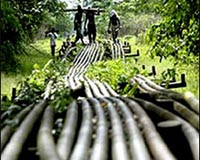
Washington DC (UPI) Apr 02, 2009 Russian energy firm Gazprom has signed an agreement with the New Nigeria Development Co. for exploration of three oil blocks in the country's north, officials from both countries said. Though rights to the blocks in the Chad Basin and Benue Trough were first acquired by Gazprom in 2005, the company has taken its time in entering the often volatile oil and gas sector beset by violence from militant groups and armed gangs. Gazprom is also reportedly set to sign a gas exploration deal with NNDC worth $2.5 billion, Nigerian energy officials said. "We are going to assist you develop your oil blocks through Gazprom, which is the biggest natural gas company in the world," said Russian Ambassador to Nigeria Alexander Polyakov, who added that the Russian energy giant was intent on bringing new oil and gas extraction technology to Nigeria. This isn't the first time that Gazprom has made inroads into entering the West African oil and gas sectors in hopes of challenging longstanding players in Nigeria like Exxon Mobil, Royal Dutch Shell and Chevron. In November 2007, Gazprom announced it was seeking additional ventures in West Africa to complement its already established relationship with Angola's state energy company, Sonangol. So far, Gazprom seems undaunted by the prospect of having to seek out new gas reserves in the often volatile Niger Delta, where militant groups have stepped up attacks over their anger with the government and its handling of the country's oil and gas profits. Militant groups like the Movement for the Emancipation of the Niger Delta have been waging a steady campaign of attacks aimed at foreign oil interests and Nigerian forces in the delta for more than two years. In 2007 alone, more than 200 people were kidnapped and several Nigerian police and soldiers killed. Since the 1970s, Nigeria, Africa's No. 1 oil producer, has pumped more than $300 billion worth of crude from the southern delta states, according to estimates. But high unemployment in the delta, environmental degradation due to oil and gas extraction and a lack of basic resources, such as fresh water and electricity, have angered some of the region's youth and incited them to take up arms. Their tactics include kidnapping oil workers for ransom and tapping into pipelines and selling oil on the international black market, a practice known locally as bunkering. For his part, Nigerian President Umaru Yar'Adua has said security of the oil-producing delta would be chief among his concerns, adding that the government would allot one-third of the country's $20 billion budget for the military and development projects in the region in hopes of stemming the violence. The decision has garnered the praise of both political allies and foes, though many in the delta remain skeptical about whether the money being promised will make its way down through a notoriously corrupt government. In addition to his crackdown on militancy, Yar'Adua has also taken foreign energy firms to task for not taking measures to reduce wasteful gas flaring. Gazprom in 2008 offered to build a project in Nigeria as part of its proposed deal to capture the large quantities of gas burned off during oil production, an offer that could prove particularly enticing to Yar'Adua. Share This Article With Planet Earth
Related Links Powering The World in the 21st Century at Energy-Daily.com  Nigeria to empower military against gangs in Niger Delta: president
 Abuja (AFP) April 2, 2009
The Nigerian government will empower its special military force in the volatile oil-rich Niger Delta to better fight militants in the region, President Umaru Yar'Adua said Thursday. |
|
|

| The content herein, unless otherwise known to be public domain, are Copyright 1995-2007 - SpaceDaily.AFP and UPI Wire Stories are copyright Agence France-Presse and United Press International. ESA Portal Reports are copyright European Space Agency. All NASA sourced material is public domain. Additional copyrights may apply in whole or part to other bona fide parties. Advertising does not imply endorsement,agreement or approval of any opinions, statements or information provided by SpaceDaily on any Web page published or hosted by SpaceDaily. Privacy Statement |
 del.icio.us
 Digg
Digg Reddit
 YahooMyWeb
 Google
 Facebook